

Issue #484: 5 Minutes That Could Add Years to Your Life 🔥

Good morning. It’s Tuesday, December 16th.
In today’s email:
Learn: Intensity Matters More Than Time
Try: Just 5 Minutes a Week
Focus: Misleading Headlines
In the News: The Courage to Rethink
Brain Games: Creativity
Stat of the Day

The number of minutes of light activity (e.g,, walking) that is the equivalent of just one minute of vigorous exercise to prevent type 2 diabetes. (Nature Study)
Learn
Intensity Matters More Than Time
I don’t have a ton of time to workout - but turns out that intensity matters even more than previously thought. And we only need a few minutes to massively impact our long-term health.
In a recent study, researchers analyzed accelerometer data (not self-reported workouts) from more than 73,000 adults and followed them for about eight years. They looked at how different intensities of movement - light, moderate, and vigorous - related to real outcomes: death from any cause, cardiovascular disease, diabetes, and cancer.
They wanted to answer one question:
How much moderate or light activity does it actually take to match the benefits of one minute of vigorous activity?
The conventional wisdom has been that 1 minute of vigorous exercise equals 2 minutes of moderate exercise. That ratio mostly came from energy estimates (using METs) and questionnaires - not from precise, objective movement data.
Turns out that intensity is worth a lot more - 1 minute of vigorous activity was associated with the same risk reduction as roughly 4-9 minutes of moderate activity.
And it’s also the equivalent of over an hour of “light activity” (see Stat of the Day).
What “Vigorous” Actually Looks Like
Vigorous doesn’t mean recklessness - putting yourself at a high risk of injury. It means effort that pushes you outside your comfort zone - where breathing gets heavy and you’re not able to hold a conversation.
The intensity is high enough that you can only sustain it for a few minutes and are pretty much only focused on that single activity - locked into the present moment.
For me - I typically do a bootcamp-style class 2-3x per week. It’s eight stations, five minutes each. Within a station, we might run an EMOM (every minute on the minute) - something like 10 box jumps or 10 push-ups + 10 dumbbell snatches every minute. You work, rest with whatever time is left, and start again on the next minute.
Sometimes I get high endorphins. Other times I’m dreading the next minute. But it’s so short you know you can get through it and I always feel great after it’s over.
Other days it’s running. After a mile warm-up, I’ll do intervals:
1-2 minutes “hard” (my definition of a sprint - but I’m probably going faster in my mind than what other people see)
2 minutes jogging
1 minute walking
Repeated for a couple of miles.
Nothing fancy. Just intentional intensity layered into something I’d already be doing.
It’s these intervals - much more than just jogging 4 miles - when I feel the difference in my energy, my speed, and my long-term fitness.
The best part of all this - it doesn’t have to take a lot of time. The small doses (thanks to the proof from this study) go a long way.
“Yes - most things are more rewarding when you break a sweat to get them.”
But again - this is something you can personalize. Other ideas:
Fast uphill walking (or with a weighted vest)
Cycling up a hill (or sprint on a stationary bike)
Rowing or elliptical intervals
Bursts of bodyweight moves (squats, step-ups, jump rope)
The key is intensity relative to you.
What the Science Is - and Isn’t - Saying
Here’s the stuff that most media headlines miss - this was an observational study, not a randomized trial. So we can’t prove cause and effect.
But the study included over 70,000 people, used an actual device (not self-reported surveys), and covered eight years. The devices were very sensitive - capturing movement in 10-second windows, picking up short bursts - hills, stairs, quick surges - the stuff people rarely remember or report accurately.
The researchers also took steps to reduce reverse causation - excluding people who developed disease shortly after activity was measured, and adjusting for medications, smoking, diet, sleep, and existing conditions.
The results were consistent - and too big to ignore:
It’s obvious that more vigorous exercise = lower health risks, and the drop is meaningful.
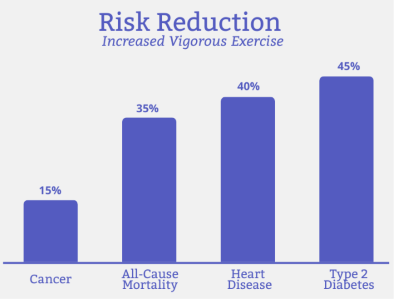
Here’s what stood out:
For all-cause mortality, increasing vigorous activity was associated with risk reductions approaching 30-50%.
For cardiovascular death and major cardiac events (heart attack, stroke, heart failure) each additional amount of vigorous activity translated into progressively lower risk.
For type 2 diabetes, vigorous activity showed one of the strongest effects, with risk reductions exceeding 40–50% at higher levels.
Even for cancer-related outcomes, where physical activity effects tend to be more modest, vigorous activity still showed a measurable protective association.
What’s especially important is how little time it took to see these benefits. You only need a few minutes a couple times a week!
Bottom line: Higher-intensity exercise improves cardiorespiratory fitness, insulin sensitivity, blood pressure, and vascular function - and is probably the best per minute ROI you can get for longevity.
Try
Just 5 Minutes a Week
No matter your current workout routine - make sure you have at least 5 minutes of vigorous (close to all out) effort this week.
Find some movements that you can safely add to your routine - whether that’s a few sprints, “walking sprints,” or 5×1 minute bursts on a bike, rower, or elliptical. You can go even shorter 10×30 seconds bursts.
This is when you boost your VO2Max, improve your metabolic health (hence the reduction in risk for type 2 diabetes), and jump-start your mitochondria.
You’ll find yourself with more energy when this becomes a consistent part of your week.
Think of these intense workouts as your investment in longevity - every minute (dollar) gets you the highest rate of return to increase your life (account balance) so you have a longer, better life!
Thrive25 Partner Spotlight
Exclusive 15% Off at Momentous!
Unlock 15% off the full range of Momentous supplements, including Creatine, L-Glutamine, Protein, Magnesium Threonate, and more - all backed by scientific research and clinical proof.
Momentous partners with top scientists and performance experts from the NFL, NBA, and MLB to create world-class products for anyone aiming to perform at their best.

Thrive25 subscribers get 15% off with code Thrive at checkout. Click HERE!
We are a proud customer and affiliate of Momentous - please consider buying products from Momentous to support our mission.
Focus
Misleading Headlines
One of the reasons Thrive25 exists is because of articles like this from Real Simple:

We’re all about doing the little things - but this is just clickbait (unfortunately, it works). But just remember to understand these articles aren’t always based in real science (they are just really simple - sorry, couldn’t resist).
Here’s our take on this list of drinks:
Berry Smoothies - good start to the day with some protein. Pro Tip: just make sure to not load it up with fruit juice or added sugar (easy to do with bananas and other fruit additives).
Green and Black Tea - also a good suggestion. I’m a big fan of Green Tea. Pro Tip: be sure to try to avoid caffeine right when you wake up and too late in the day to avoid sleep disruption.
Black Coffee - most studies show coffee is ok, maybe even good for you. But in addition to the caffeine recommendation for tea, don’t just assume this quote is right “coffee can cut your risk of premature death by up to 30%.” Sitting all day drinking coffee to combat stress won’t help anyone live longer.
Hydrogen-rich Water - this may be valuable, but right now studies are limited if it’s that much better than water. Pro Tip: For now you don’t need to spend the money - just drink 8+ cups of filtered (reverse osmosis) water per day to stay hydrated. That’s the biggest win.
Red Wine - here’s where it all falls down. By now resveratrol has been totally debunked as good for you (even if it is, the quantity necessary is gallons of wine). Pro Tip: Enjoy alcohol at your discretion, but don’t think it’s going to help you live to 100.
H&L in the News
Eat More Chocolate: A new study finds that one compound in cocoa (theobromine) is connected with slower epigenetic aging in humans. To be fair, this is association (not causation) and these clocks aren’t perfect - but still seems like a win for the holidays. (Longevity Technology)
Rewriting the Brain’s Gatekeepers: Scientists have successfully replaced defective microglia in humans for the first time - slowing a rare brain disease and opening the door to future therapies that could one day target Alzheimer’s and other neurodegenerative conditions. (Lifespan.io)
The Courage to Rethink: History’s boldest minds didn’t just challenge others - they overturned their own ideas. From Augustine to Wittgenstein, these five thinkers show why changing your mind isn’t weakness but true intellectual strength. (Big Think)
Brain Games
Creativity
Creativity improves working memory, decision-making speed, and mental flexibility. It's brain training for the real world. (Bonus: creative thinkers tend to live longer)
Pick any of the following, or all three, and have some fun…
The “Invisible Elevator”
You step into a hotel elevator and suddenly, none of the buttons are labeled - not floors, not lobby, not even “open door.” A voice says: “You may now go where you need to be.”
What do you do? Where do you end up?
School Pick-Up Chaos (Revisited)
Drop-off and pick-up at your child’s school is a 25-minute ordeal of chaos. There’s honking, awkward half-waves, and one SUV that always breaks the rules.
Come up with THREE outside-the-box ways to redesign the process - we’re talking creative, not bureaucratic.
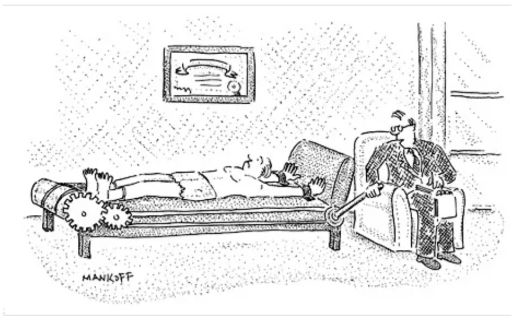
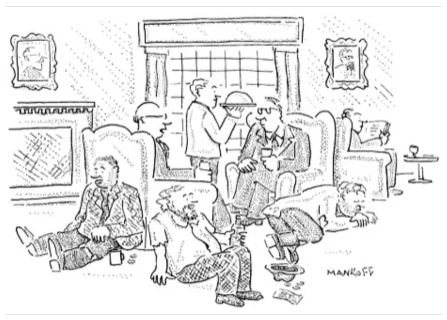
Caption This
Pick one of the following cartoons and give it a caption.
Rule: Must be under 20 words.
Tip: The best captions include a twist or observation we’ve all felt - but never said.
Got some cool ideas, share them with us.
Thanks for joining us today!
Want to see what we’re up to? Sign up for early access to our platform
Check out the latest videos on our YouTube channel
Got feedback, recommendations or stories to share? Tell us what’s on your mind here
Want this direct to your inbox? Sign up here

Why Thrive25
We’re 40-something dads that felt our bodies and minds start to slow down and we’re not ready for that. We found too much information on every subject. So we started Thrive25 to transform what we’ve learned into something useful for the rest of us to spend just 3-5 min a day to optimize our health & longevity.
This newsletter is for you and we truly value your feedback. Never hesitate to reach out to us at team@thrive25.com.
To health!
Sign up for free:
The information in this newsletter is for informational purposes only and may not be appropriate or applicable based on your individual circumstances. Thrive25, Inc. does not provide medical, professional, or licensed advice. Please connect with your healthcare professional for medical advice specific to your health needs.