

Issue #482: When Do We Actually Get "Old"?

Good morning. It’s Tuesday, December 2nd.
In today’s email:
Focus: When Do We Actually Get “Old”?
Move: Tight Hamstrings (and Your Lower Back)
Try: Smashing & Flossing
In the News: Ultimate Wellness Influencers
Brain Games: Calcudoku
Stat of the Day

The percentage of Americans under 65 who expect to age “extremely or very well.” Umm - that’s a lot of people worried about aging. (Pew Research, Nov 2025)
Focus
When Do We Actually Get “Old”?
91.
That’s the average age Americans say they want to reach.
But here’s the thing: less than half of adults over 65 say they’re aging well.
That’s a lot of years to not feel good - and most of us are worried about it. In a Pew Research survey, Americans under 65 were more worried about their future health than their finances.
When does “old age” start? We’re aging from the day we’re born - we know when we hit puberty, adulthood, menopause. But getting old doesn’t have that same consistent stage for everyone.
The best definition of aging I could find is that it’s the accumulation of damage in our cells and tissues to the point where they stop working the way they should. Our body can withstand a lot - but eventually our repair system can’t recover and we don’t perform like we used to.
Thanks to modern medicine, many of us may reach 91. But if we start feeling old at 65, that kinda negates the point of living longer.
The encouraging part: there’s a lot we can do - right now - to influence how well we age and the damage we bring to our bodies.
Here are three areas that matter more than we might realize.
1. How we think about aging
I’m not talking about forced positivity. But the mindset we bring matters - are we fearful or excited about the future; do we think old age brings memory loss or wisdom?
Aging is a self-fulling prophecy. If we focus only on what we might lose, aging becomes something to fear. But if we look toward what we might gain - perspective, confidence, steadiness - the experience feels different.
Dr. Becca Levy has shown that our beliefs about aging can influence our health as much as anything. These beliefs and thoughts even affect our longevity.
Of course, it’s not enough to just think positive thoughts - you’ve got to take action too.
2. How we move
Movement is the clearest prescription to living better and longer.
A recent randomized trial - one of the highest standards in medical research - followed people with cancer for 15 years. Those who exercised were:
37% less likely to die during the study period
28% less likely to have their cancer return
That’s for people already in the fight of their lives. The preventive effect of exercise for the rest of us is even stronger.
Movement is medicine. And the sooner we treat it that way, the more of our later years we’ll spend living, not just lasting.
3. How we manage stress (and pace ourselves)
The world is honestly moving too quickly. Our nervous system hasn’t evolved to keep up. So we push, burn out, recover, and repeat. In that cycle, we ignore our relationships, make life feel like a hamster wheel, and slowly kill ourselves with chronic stress.
And yes - chronic stress accelerates our aging.
Remember: more people are worried about their future health than their money. And the things we chase today - status, output, productivity - won’t matter if the trade-off is spending our last 15 years feeling “old.”
No one is watching - we’re the ones judging ourselves. And no one gets out of this life without an endpoint. The only thing we can do is set ourselves up to be able to stay active for the entire journey.
How do you want to answer - “how well are you aging”?
Thrive25 Partner Spotlight
Save up to $100 on Qi35 This Holiday Season

The holiday season is here and TaylorMade is making it ridiculously easy to score something everyone on your list will actually love.
The Qi35 lineup is built for players who want more speed, more forgiveness, and a whole lot more fun on the course. Right now you can save $100 on Qi35 drivers and $50 on Qi35 fairway woods and rescue clubs.
Whether you’re upgrading your own bag or surprising the golfer in your life, this is the kind of gift that pays off round after round.
Move
Tight Hamstrings (and Your Lower Back)
Ever had that moment when you feel a sudden jolt in your lower back - you know, the kind when you know instantly that something’s off?
We all think - “If I just hadn’t lifted that box of holiday lights…” or “if I hadn’t stepped like that…” It shows up out of nowhere, and we wish we could rewind about 30 seconds.
But the truth is, that moment isn’t when the problem started. Most lower-back tweaks come from our pelvis being pulled out of position long before the movement that “set it off.”
And one of the biggest culprits of that imbalance? Our hamstrings.
Our hamstrings are three large muscles - the semimembranosus, semitendinosus, and the biceps femoris (if it’s helpful just remember “it’s the bicep of your leg”).
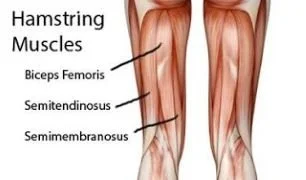
All three need to be strong and have their full range of motion to let the pelvis stay centered and be positioned correctly. Tight hamstrings affect everything above them - hips, back, neck.
One of the biggest problems - sitting all day.
When we keep our knees bent for hours at a time, our hamstrings end up staying in a shortened position.
They adapt (not in a good way) so that even when we stand or walk, they don’t give us the range we need. That constant tension tips the pelvis forward and throws off alignment.
We feel it in our posture first, then in our gait, and eventually - when the back is tired of cleaning up the mess - as a sharp, memorable “there it goes” moment.
It doesn’t take much imbalance to set this up. When one hamstring is tighter than the other, the pelvis rotates slightly.
Add tight hip flexors on top, and things start to feel subtly off-center. That’s usually the real origin of those sudden back jolts we blame on one unlucky movement.
The good news - it doesn’t take a lot to make a big difference with our hamstrings. Beyond a good AM stretch and weekly yoga session - there’s a few movements to keep our hamstrings long and strong.
Try
Smashing & Flossing
Here are two simple drills worth building into your routine:
1. Hamstring Lacrosse Ball Smash
Sit on a bench or box with your leg straight. Place a lacrosse ball under the hamstring and slowly move your leg forward/back and side-to-side. When you hit a tight spot, breathe and let it release. One to two minutes per side is plenty. Try to do this daily if this is a risk area.
2. Banded Hamstring Floss
Anchor a heavy band around something sturdy and loop the other end around one of your legs as close to your hip as possible.
Step forward until the band has tension. With a flat back, hinge at the hips and slide one leg behind you, heel down and knee straight. You’ll feel a long, controlled stretch. Stand tall, switch legs, and repeat for 5-10 slow reps each side.
Keeping your hamstrings open isn’t just a “nice to have” - it's key to staving off the dreaded low back injury (and standing up a little taller).
Pro Tip: Fast forward to the 3:00 min mark in the video below to see the movement.
H&L in the News
Cut the Hidden Risk: A new study links ultraprocessed foods to higher precancerous polyp risk in women under 50. Here’s what researchers know, why rates are rising, and how to lower your colorectal cancer risk with smart lifestyle shifts. (NYTimes)
Nature’s First Wellness Gurus: From monkeys using millipedes as bug spray to whales perfecting exfoliation, animals have been hacking wellness long before humans. Their surprising self-care strategies reveal how nature pioneered the habits we chase today. (WIRED)
When Ideas Test You: Philosophy’s wildest thought experiments aren’t just mind games - they challenge how you see reality, identity, and meaning. Explore the scenarios that stretch your thinking and reshape the way you live. (Big Think)
Brain Games
Calcudoku
The objective is to fill in the grid with the correct digit in each cell, between 1 and 5:
Each row contains exactly one of each digit
Each column contains exactly one of each digit
Each bold-outlined group (with same color) must equate the result with the numerical operation - addition (+), subtraction (-), multiplication (x) and division (/)
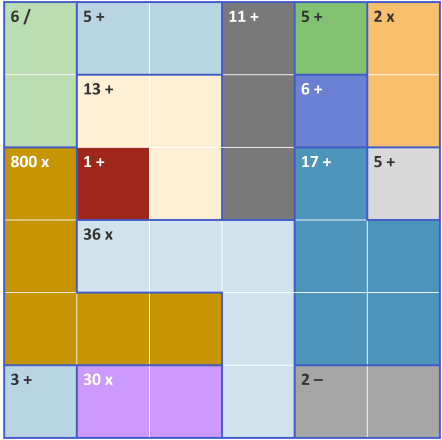
It’s go time - this one is a little bit easier than others we’ve shared - try to solve this in under two minutes. Ready…set…go!
Credit: Brainzilla
** For answer, scroll to the bottom of the email
Thanks for joining us today!
Want to see what we’re up to? Sign up for early access to our platform
Check out the latest videos on our YouTube channel
Got feedback, recommendations or stories to share? Tell us what’s on your mind here
Want this direct to your inbox? Sign up here
** Brain Games Answer **


Why Thrive25
We’re 40-something dads that felt our bodies and minds start to slow down and we’re not ready for that. We found too much information on every subject. So we started Thrive25 to transform what we’ve learned into something useful for the rest of us to spend just 3-5 min a day to optimize our health & longevity.
This newsletter is for you and we truly value your feedback. Never hesitate to reach out to us at team@thrive25.com.
To health!
Sign up for free:
The information in this newsletter is for informational purposes only and may not be appropriate or applicable based on your individual circumstances. Thrive25, Inc. does not provide medical, professional, or licensed advice. Please connect with your healthcare professional for medical advice specific to your health needs.